
Membrane Selection Knowledge
Choose diffuser membrane material by real operating conditions.
Use Blue Water’s practical selection logic to compare TPU, EPDM, and Silicone for wastewater aeration projects. The page combines a quick recommendation tool, material knowledge graph, lifecycle cost view, and engineering risk checks.
Diffuser membrane selection should review wastewater source, pH, oil, chemicals, temperature, fouling risk, expected life, and replacement access before choosing EPDM, Silicone, or TPU.
Selection Logic
Membrane material recommendation tool.
Enter the operating condition. The recommendation is a project-screening result for quotation discussion, not a substitute for final engineering confirmation.
Material Positioning
TPU, EPDM, and Silicone are not interchangeable.
Each membrane material has a different operating boundary. The best choice depends on wastewater chemistry, temperature, maintenance access, and lifecycle cost target.
TPU
High-performance membrane direction for industrial, oily, solvent-risk, wider pH, and high maintenance-risk applications.
- Strong tensile and abrasion performance.
- Lower replacement frequency can reduce shutdown risk.
- Review grade selection for sustained high temperature.
EPDM
Practical economy choice for mild municipal wastewater, oil-free conditions, and projects controlled by initial purchase budget.
- Good default option for neutral, stable water conditions.
- Not preferred for oil or solvent exposure.
- May require more replacement events over long operation.
Silicone
Specialty material direction for extreme temperature, biocompatibility, and certain special process requirements.
- Useful when temperature range is the dominant condition.
- Mechanical strength must be checked carefully.
- May be combined with TPU in controlled material systems.
Product Knowledge Graph
How membrane choice connects to diffuser performance.
The knowledge graph links project conditions, membrane material properties, diffuser type, lifecycle cost, and final inquiry data.
Operating condition
Wastewater source, oil, solvent, pH, temperature, load fluctuation, maintenance window, and replacement risk.
Material boundary
TPU for harsh chemistry, EPDM for mild economy, Silicone for extreme temperature or special grade.
Diffuser format
Disc diffuser, tube diffuser, aeration grid, replacement membrane, or accessories package.
Performance result
Oxygen transfer stability, bubble release, elasticity retention, fouling risk, and service interval.
Lifecycle cost
Initial cost plus replacement frequency, shutdown cost, maintenance labor, and stocking strategy.
Engineering review
Confirm final material with water data, tank dimensions, airflow, pipe layout, and project drawings.
Quotation data
Product type, membrane material, quantity, diameter or length, connection type, and delivery schedule.
Four-step selection method
- Condition analysis: identify water source, pH, temperature, oil, solvent, and oxidation risk.
- Risk identification: avoid material failure caused by one-dimensional price decisions.
- LCC assessment: compare replacement frequency and shutdown cost, not only unit price.
- Decision confirmation: review final grade and diffuser structure with project data.
Best next data to send
For faster material review, provide wastewater type, pH range, temperature, oil or solvent risk, tank dimensions, airflow, diffuser type, and whether the project is new build or replacement.
Visual Evidence
Selection charts from Blue Water material analysis.
These figures summarize material performance, application compatibility, life-cost-performance balance, lifecycle cost, and decision flow.
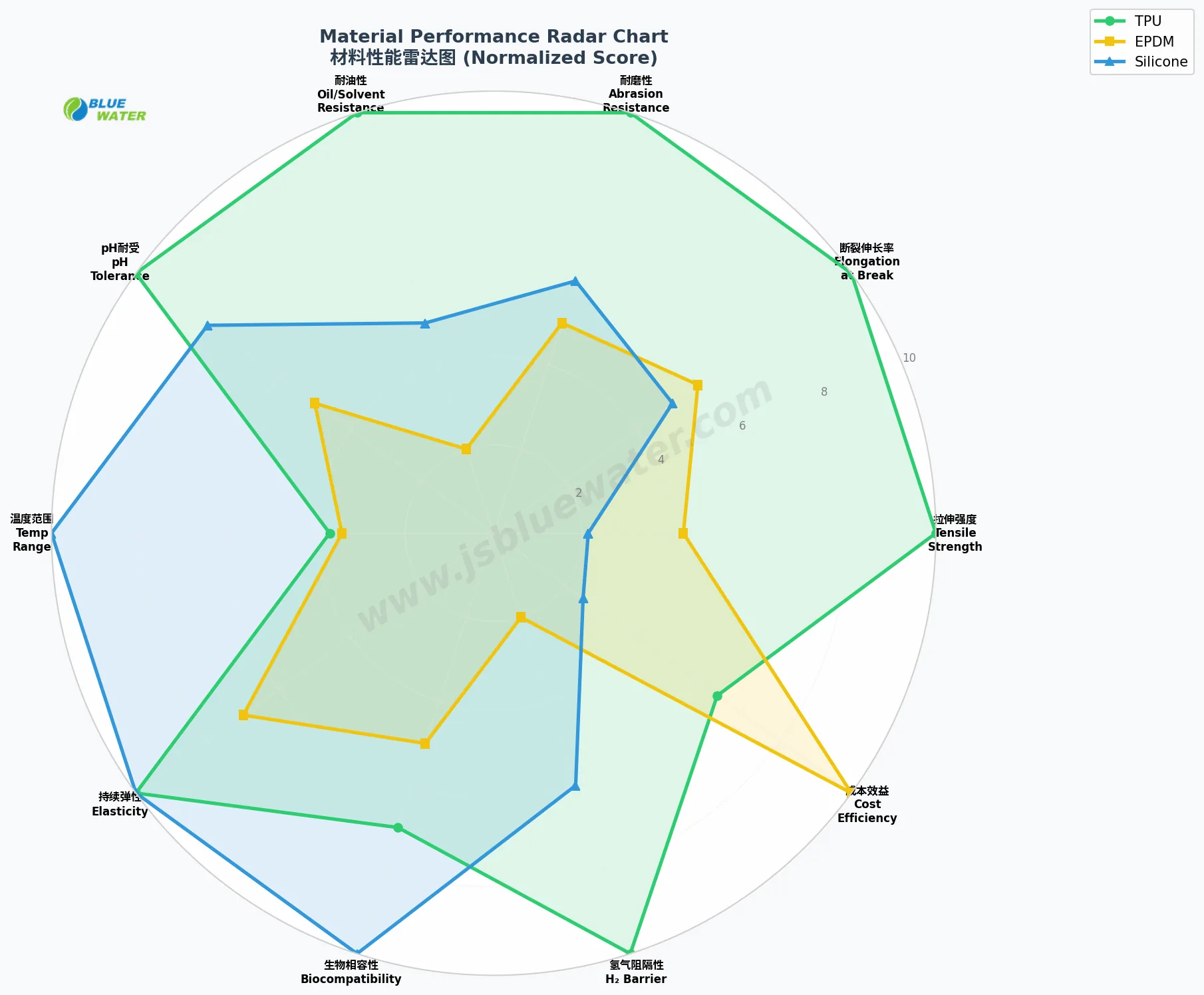
Material performance radar
TPU leads in tensile strength, elongation, abrasion, oil resistance, and wider pH tolerance; Silicone leads in temperature and biocompatibility.
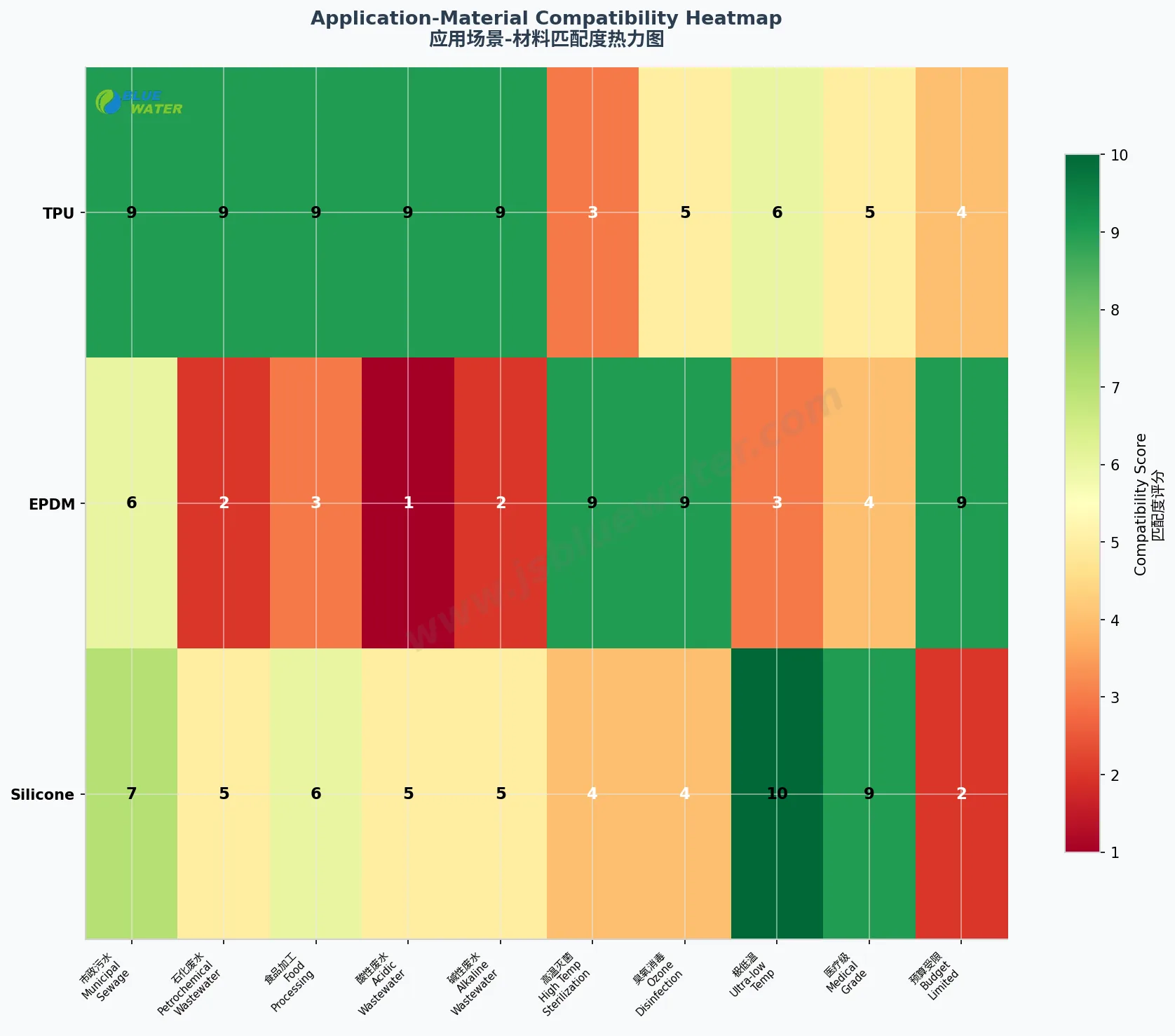
Application compatibility
Industrial, oily, acidic, and alkaline wastewater push selection toward TPU; mild or special temperature scenarios need separate review.
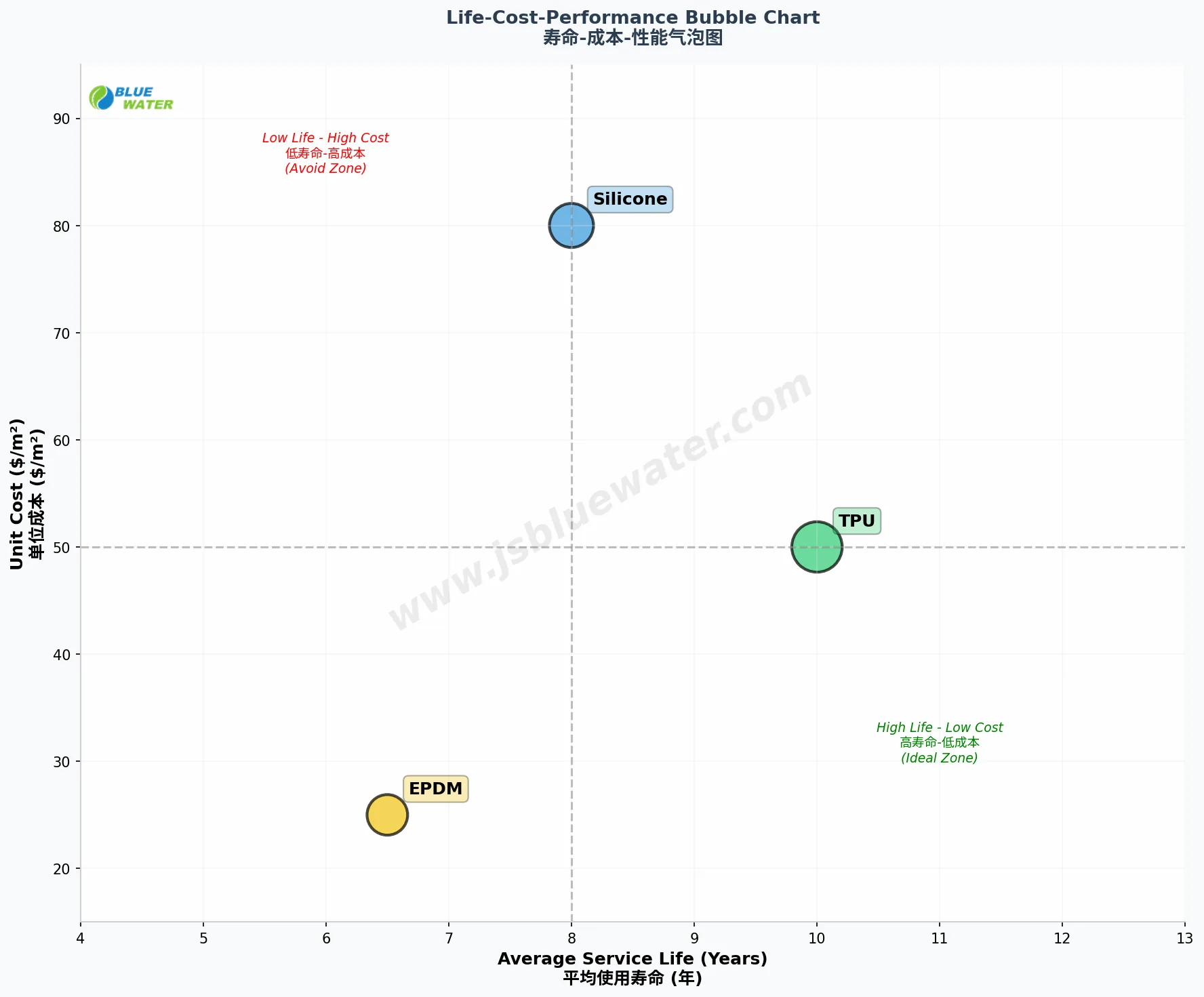
Life, cost, and performance
Initial price does not show total project value. Service life and performance score should be included before final purchase decisions.
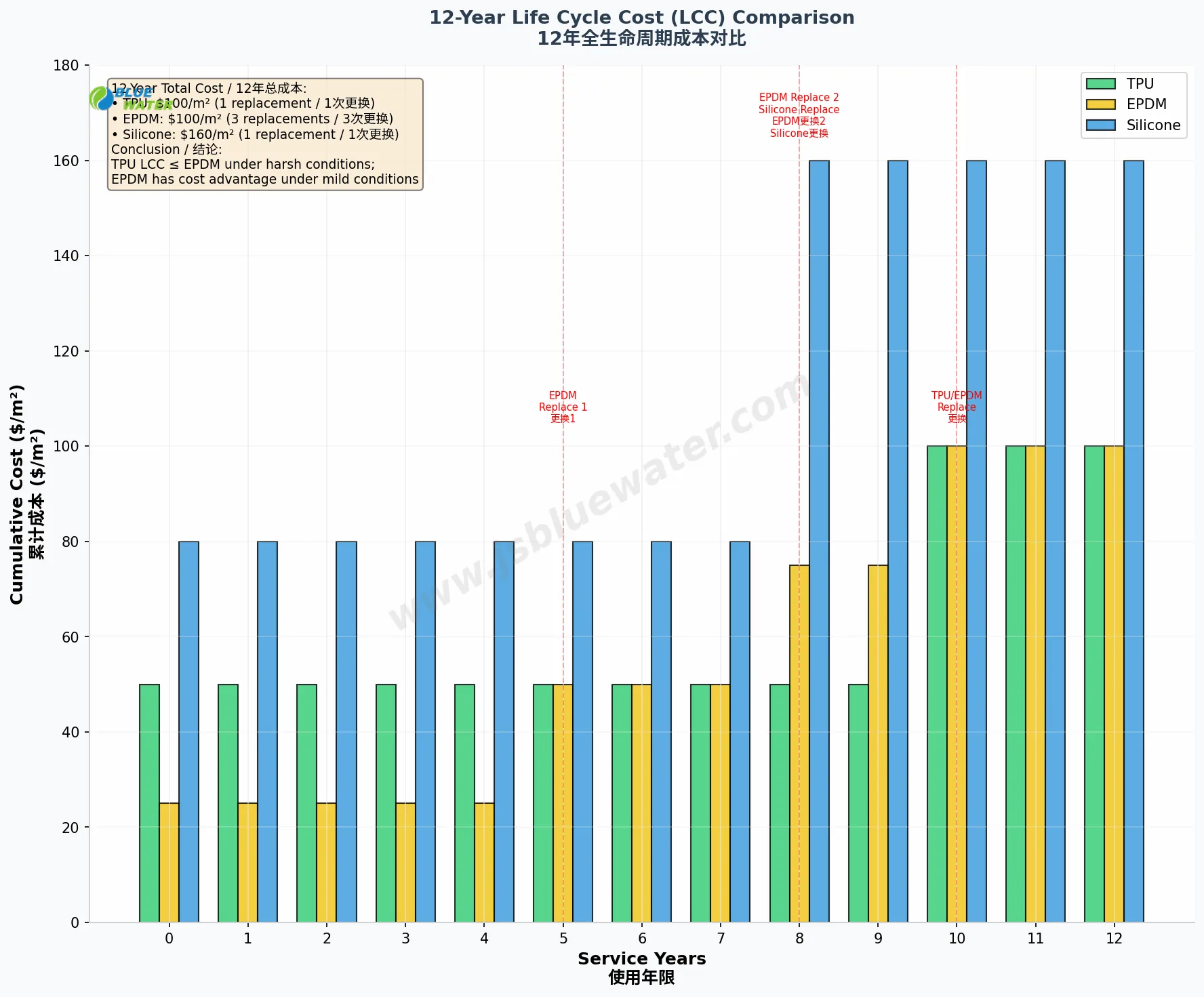
12-year lifecycle cost
Under harsh conditions, TPU can match EPDM’s 12-year material cost while reducing replacement events and downtime risk.
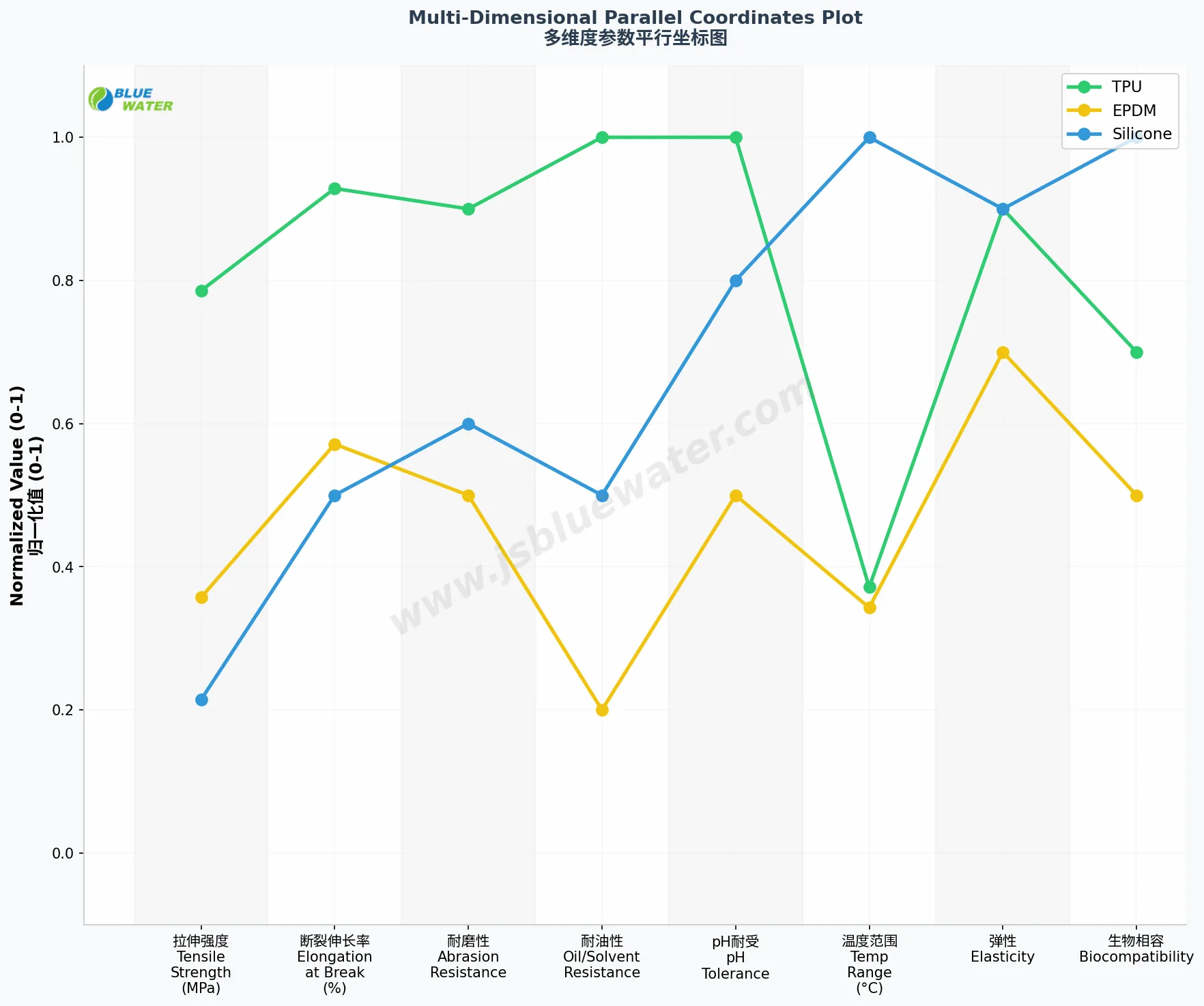
Multi-dimensional comparison
Parallel coordinates make weak points visible: EPDM drops in oil and pH resistance, while Silicone needs mechanical stress review.
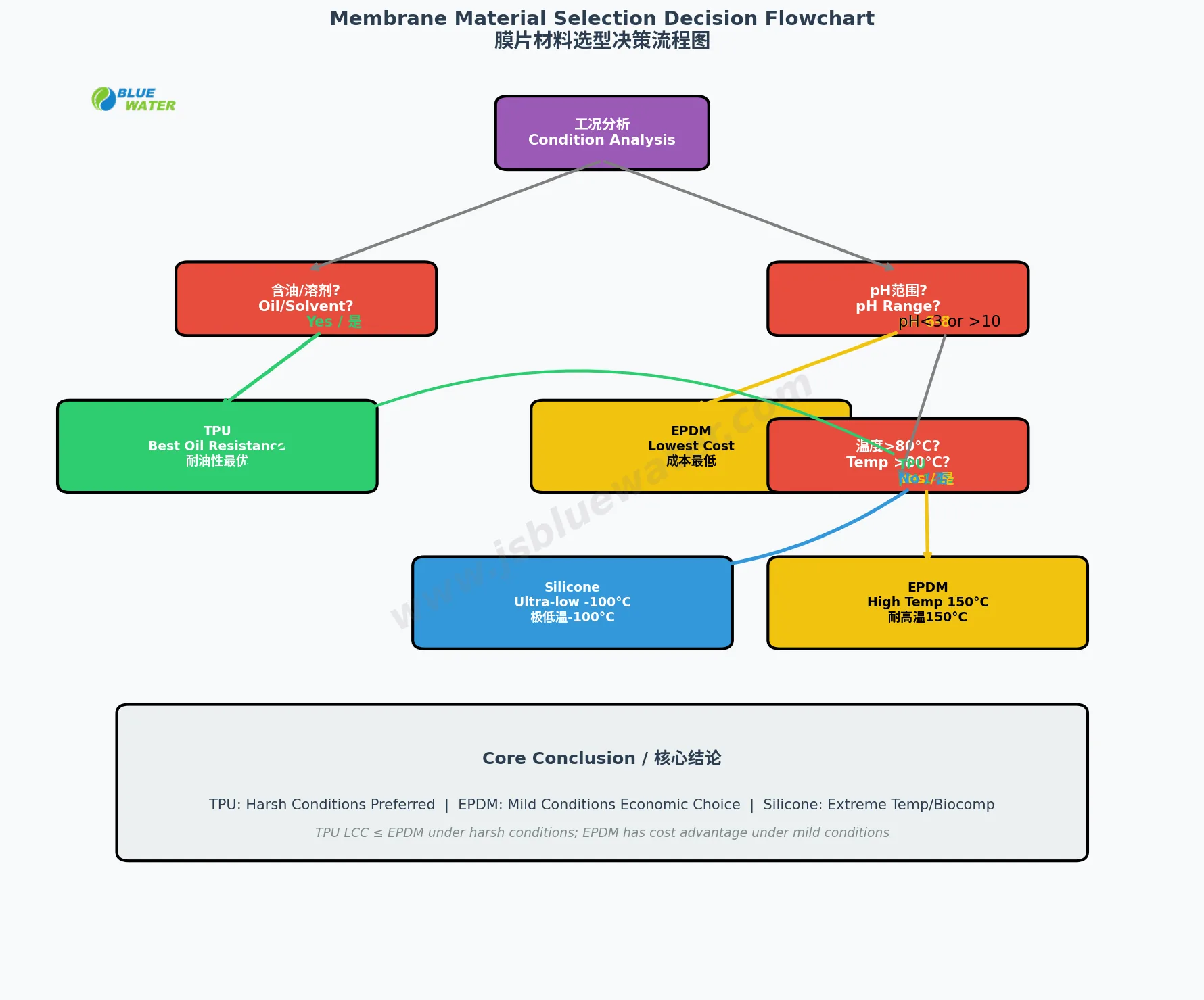
Decision flowchart
The core decision path starts with oil or solvent risk, then checks pH, temperature, and project priority before confirming material.
Risk Warnings
Common material mismatch risks.
These points help procurement and engineering teams avoid selection shortcuts that increase replacement frequency or failure risk.
EPDM in oily wastewater
Risk: oil or solvent exposure may accelerate hardening, cracking, and service-life loss.
- Direction: review TPU first when oil, solvent, petrochemical, or surfactant risk exists.
TPU under long high temperature
Risk: sustained operation above 90C requires grade confirmation and temperature control.
- Direction: review EPDM or Silicone depending on chemistry and temperature profile.
Silicone under high stress
Risk: lower tensile strength can increase tearing risk under high airflow, cycling, or mechanical stress.
- Direction: review TPU when mechanical durability is the main concern.
Selection by unit price only
Risk: lower initial price can be offset by more replacements, downtime, and maintenance labor.
- Direction: compare lifecycle cost and shutdown risk before final purchase.
Engineering Support
Send project data for final membrane selection.
Blue Water can review diffuser type, membrane material, tank condition, airflow, pipe layout, replacement schedule, and quotation direction for wastewater and aquaculture aeration projects.